5 
“All over the island of Ireland, community gardens have become thriving spaces for social connection, human health and wellbeing,” offers Kate Chandler, Communities Pollinator Officer for the National Biodiversity Data Centre. “Pollinators are important, but often overlooked, members of our communities; they are essential for the growth of many food plants including apples, strawberries and tomatoes, and also support wild native plants.
“A hugely important part of the UN Sustainability Development Goals is about partnership and how we can work together to improve our environment.
“The All-Ireland Pollinator Plan has been a valuable guide for many of the actions we have taken over the years, from chemical-free gardening and native planting to habitat creation and community education.
The bees’ businees… SAT20JUNE26
 ut together by the National Biodiversity Centre in collaboration with Community
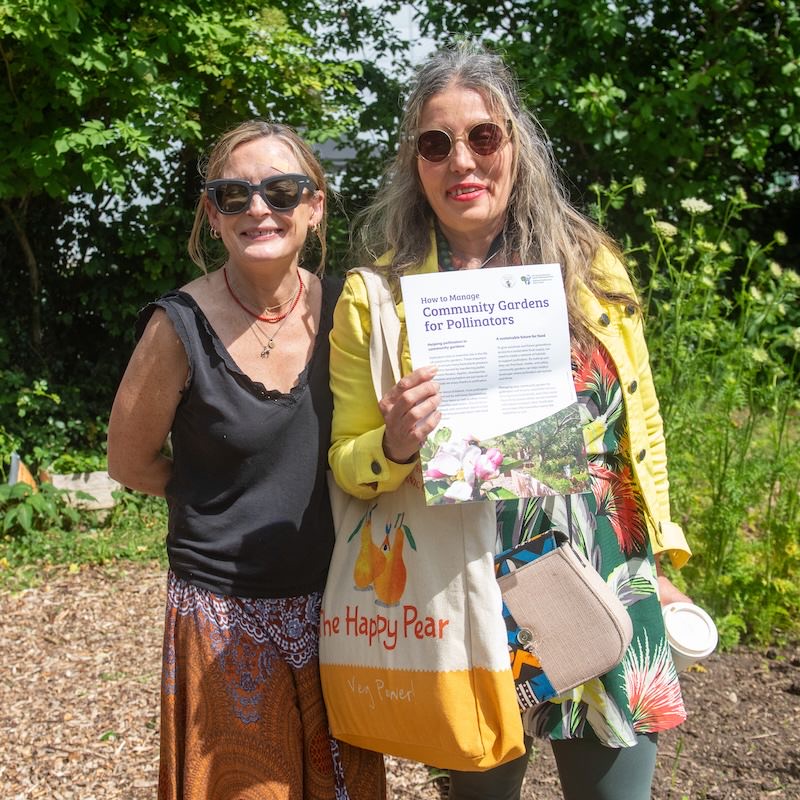
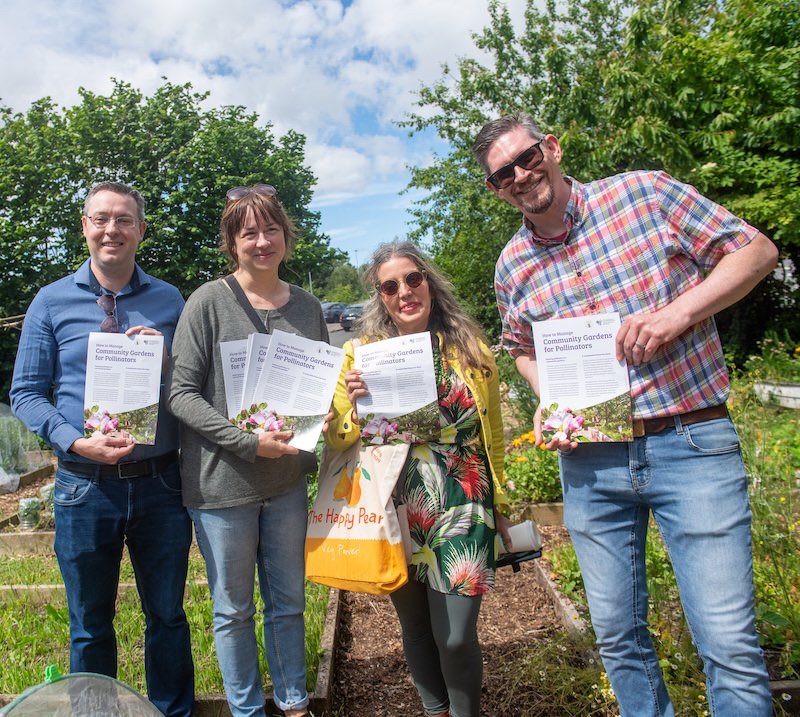
  Gardens Ireland, Managing Community Gardens For Pollinators does exactly what it says on the booklet cover.
 ut together by the National Biodiversity Centre in collaboration with Community
  Gardens Ireland, Managing Community Gardens For Pollinators does exactly what it says on the booklet cover.
Which is, giving advice and tips on how your garden grows best when it comes to bees, hoverflies, butterflies and beetles.
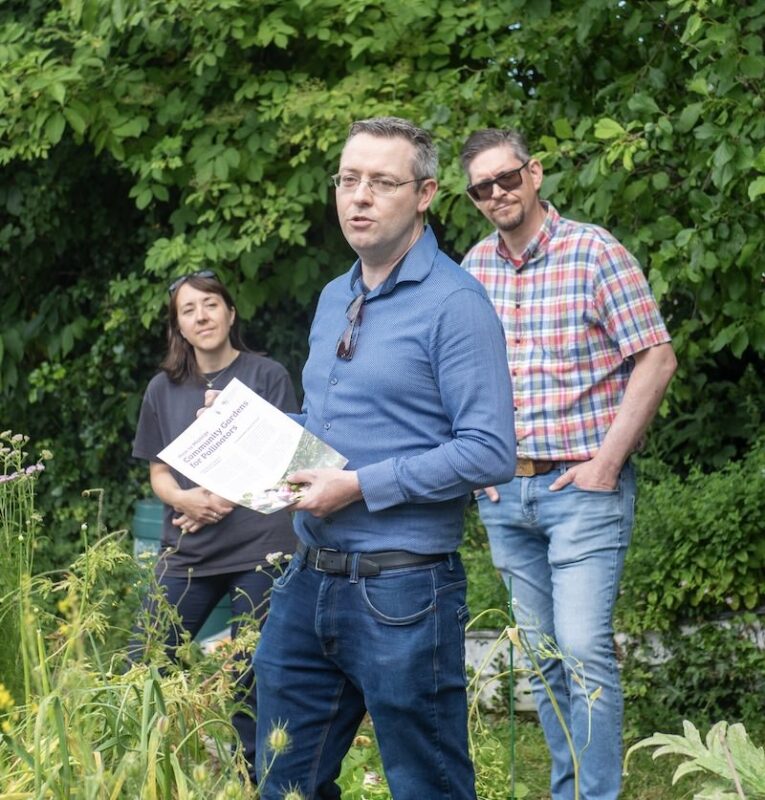
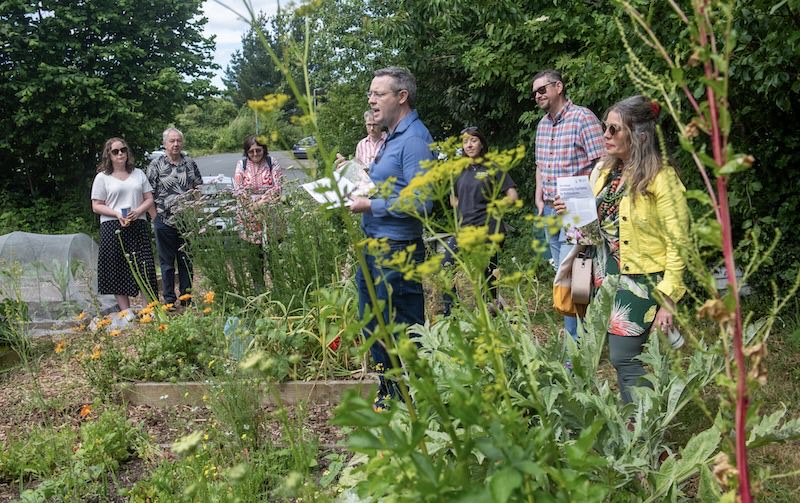
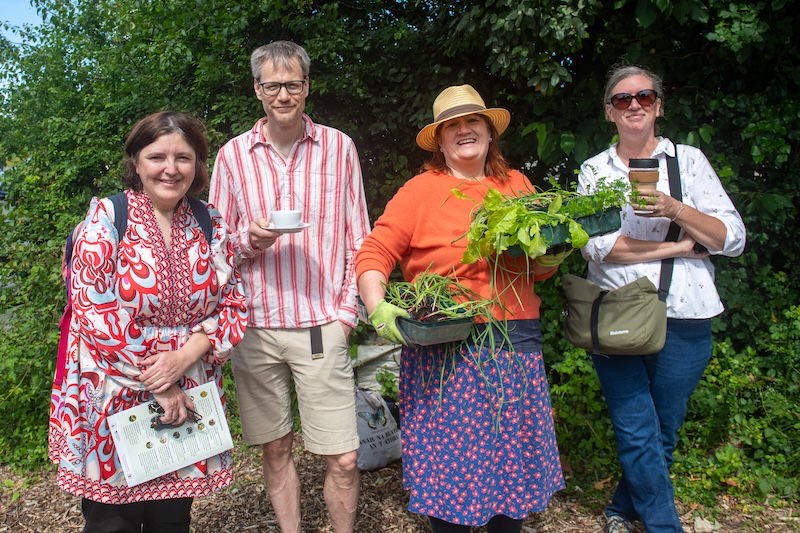
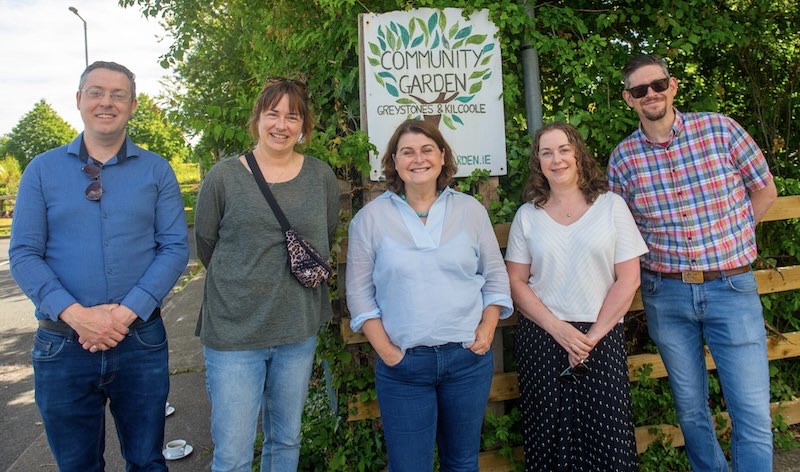
Taking place in the town’s community garden at Shoreline Greystones this morning, there were smiling, happy heads and merrily green fingers aplenty.
 And sure, they all had something wise to say about the big day…

“All over the island of Ireland, community gardens have become thriving spaces for social connection, human health and wellbeing,” offers Kate Chandler, Communities Pollinator Officer for the National Biodiversity Data Centre. “Pollinators are important, but often overlooked, members of our communities; they are essential for the growth of many food plants including apples, strawberries and tomatoes, and also support wild native plants. Like us, they need food and shelter to survive, ideally in an environment where chemicals are kept to a minimum or not used at all.

“Community gardens are perfect spaces to demonstrate how we can achieve a wider landscape where people and pollinators can thrive together. We were delighted to work with Community Gardens Ireland on this new booklet, which contains evidence-based actions for any community garden to help encourage pollinators like bees, hoverflies and moths to visit communal growing spaces and support the growth of sustainable, locally grown food.”
 Fair enough. Over to Dónal McCormack, co-chairperson for Community Gardens Ireland added: “Community gardens offer a sanctuary for people, plants and pollinators. These amazing spaces bring together all members of the community to sow, grow and harvest food together.
 Fair enough. Over to Dónal McCormack, co-chairperson for Community Gardens Ireland added: “Community gardens offer a sanctuary for people, plants and pollinators. These amazing spaces bring together all members of the community to sow, grow and harvest food together.
“We have seen a huge interest in community gardens throughout the island of Ireland and our vision is for every community to have a space to grow.
“A hugely important part of the UN Sustainability Development Goals is about partnership and how we can work together to improve our environment.  Community Gardens Ireland were delighted to partner with the National Biodiversity Data Centre to deliver this new booklet, and we wish to also thank Greystones Kilcoole Community Garden for hosting this event at their beautiful space.

“Our hope is that this new booklet will help inspire more pollinator-friendly community gardens throughout the island of Ireland.”
 Bloom! Spotting the microphone, Adam Calihman from the Greystones Kilcoole Community Garden chimed in, “We are delighted that Greystones Kilcoole Community Garden has been chosen as the location for the national launch of this new pollinator-friendly community gardens booklet. It is a wonderful recognition of the work of our members, volunteers, stakeholders and the wider community, who continue to
  nurture a space where food growing, biodiversity and environmental stewardship go hand in hand.

 nurture a space where food growing, biodiversity and environmental stewardship go hand in hand.
“The All-Ireland Pollinator Plan has been a valuable guide for many of the actions we have taken over the years, from chemical-free gardening and native planting to habitat creation and community education.  Community gardens may be small in size, but they can have a significant impact by supporting pollinators, connecting people with nature and inspiring positive action far beyond their boundaries.
 Community gardens may be small in size, but they can have a significant impact by supporting pollinators, connecting people with nature and inspiring positive action far beyond their boundaries.
Our garden occupies roughly a tenth of an acre yet serves dozens of households and volunteers, offering a space where people can connect with nature and each other while strengthening community and preserving biodiversity. It demonstrates the enormous potential of community gardens and what could be achieved if more space was made available for similar projects in our area.”
 Big thanks to the award-winning John McGowan for taking some photosnaps of the day – full gallery in hi-res right here.

You can find out more about the Greystones Kilcoole Community Garden right over here, and check out The All-Ireland Pollinator Plan here, and the new booklet here.