657 
With her book hitting shelves today, we caught up with the understandably
GG: You’re 12, falling in love with Irish history, and with books – was there a point early on when you knew you wanted to be a writer? The day Marita Conlon-McKenna visited your school…?
Were there other influences on you back then – or was this ambition carved out in your room?
What was the spark for Girls Who Slay Monsters? Feminism? Mythology? Marvel? Or just a good idea for a book?
Growing up, I would have loved them. And disappointingly, today, children still aren’t taught about Irish gods in school. Instead, they know more about the likes of Greek warrior Athena, and Norse trickster Loki – the heroes of so many popular books and Marvel movies – than they do of Éire, our country’s fierce namesake, Dian Cécht, the divine healer, or Bé Chuille, the demon slayer. Irish children deserve to know the stories of Irish gods, preserved for them by their ancestors.
When it comes to ancient Irish goddesses, what’s the main source for information? You do know that, eh, some of these goddesses might not be real, right?
To compose my stories about these authentic Irish goddesses, I drew from over thirty medieval Irish texts, plus works in folklore, Celtic studies, literary critique, and botany – too numerous to list here. But my book was never intended as a scholarly work.
Some well-known goddesses featured in epic tales, short stories, or poems, and I would stitch their stories together. Others were more challenging. For instance, I found a small extract – barely two paragraphs – about a goddess named Bé Mannair ‘Woman of Destruction’.
In among the many heroines in your book, there’s a giant being body-shamed, a shape-shifting eco-warrior and a gender-fluid spy. Might the hand of a modern author be involved in such descriptions?
Was there actually a struggle, as reported, when it came to the surname on the book…?
Aimed at kids from nine to twelve – liberating to have a target reader, or restricting?
What would you hope these kids get from Girls Who Slay Monsters? Other than tips on how to win in a battle.

Ellen Ryan 29SEPT22
 hey say history is always written by the winners, but they may have
  missed out a telling twist to such tales.
 For Greystones author Ellen Ryan, this was an imbalance she noticed very early on, as Marita Conlon-McKenna’s Irish history novels sparked a hunger for exploring our country’s past. And from the start, the 12-year-old was drawn to Ireland’s unsung heroes.
 proud first-time author outside Halfway Up The Stairs bookshop this afternoon, to dig a little deeper into this liberating revision of Irish folklore…

 I couldn’t understand why I hadn’t heard these stories before.
 It is their right to know these stories. This conviction was the spark that led me to write Girls Who Slay Monsters.

 And in challenging the Fianna, she would step into her later, extraordinary powers. That was how I pieced together a back story to the goddess, how I tried to imagine what it felt like to be her.
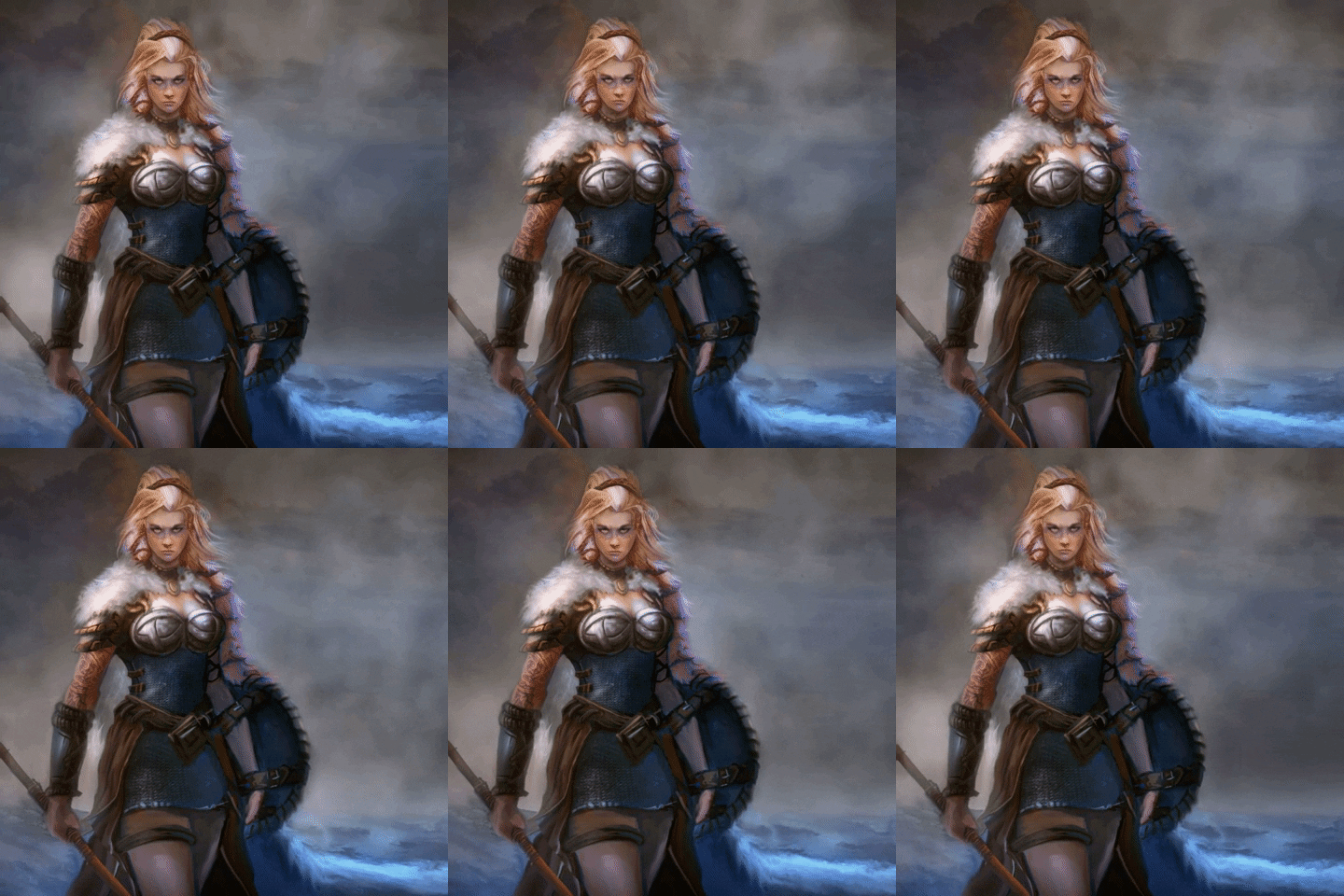 It felt like an honour, to place myself inside the minds of these goddesses – piecing together their origin stories and relationships with family, and themselves – the propellers of later brave or bloodthirsty deeds.

 Ellen, daughter of Paula the artist, who is daughter of Carmel the scholar, who is daughter of Nelly, who witnessed the founding of a nation.
 I hope these stories will enrich their sense of cultural identity. I hope they will feel empowered, to know that they have their own pantheon of mythical gods – their own superheroes – and that these Irish heroes came in many shapes, skin shades and sizes.