1.1K 
The flagstaff was a constant fixture for many decades during the remainder of the 19th century through to the early part of the 20th century.
In April 1989, the circular cement base, metal stays and yardarm of the flagstaff were damaged in a car crash and the flagstaff was subsequently removed. Today a white ship’s anchor lies adjacent to the spot where the flagstaff stood.
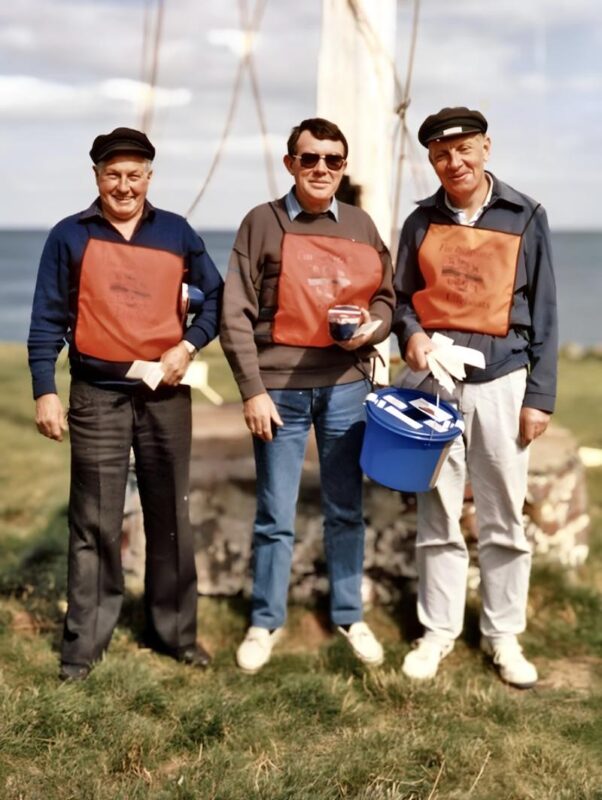
Flag Day at the Flagstaff 1980s
 n the occasion of the 85th anniversary of the Dunkirk evacuation during World War Two,
  Gary Paine retraces a link between Greystones and that seminal moment during the course of the war.
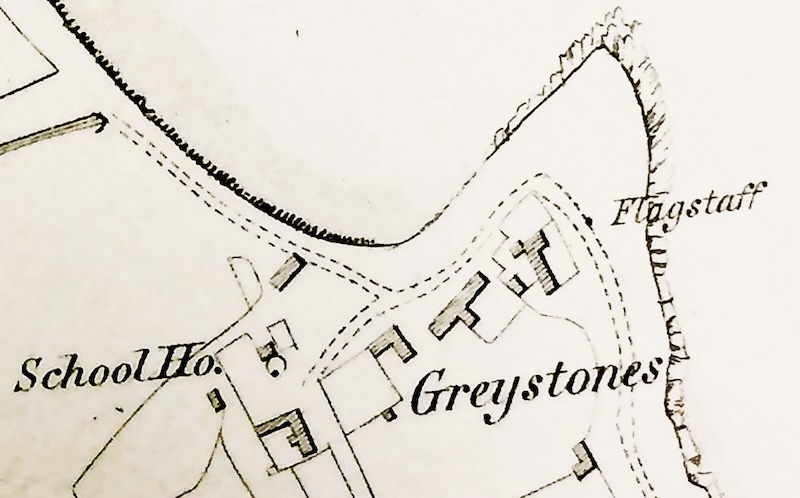 The close-up section of the area on the 1838 Ordnance Survey map (pre-dating the construction of the original jetty in 1847) already marked the existence of the flagstaff at this point. It was thus a known local feature a generation before even the arrival of the railway, the post office or any of the town’s churches.

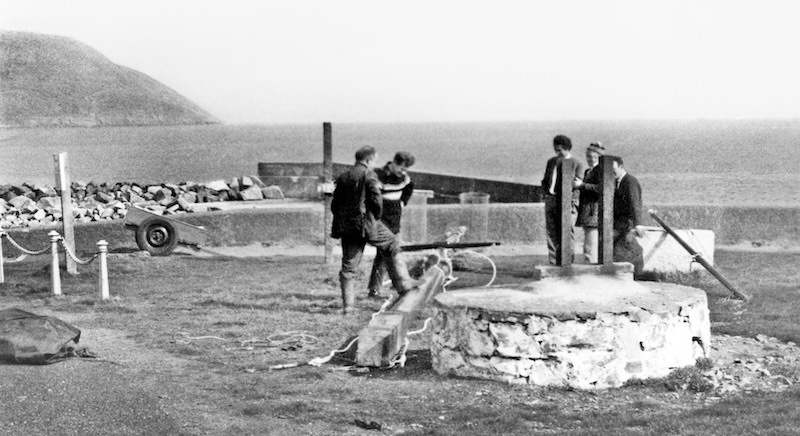
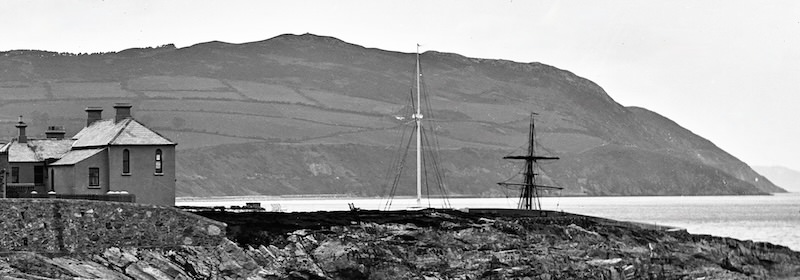 The photo above dating from the era when coal schooners used to import coal to Greystones harbour shows a common view of that time. The whitewashed, land
  based flag staff, anchored with its stays, contrasts with the darker mast of a schooner moored alongside the pier in the harbour.
 Today marks the 85th anniversary of the commencement of the Dunkirk evacuation (Operation Dynamo) during World War Two. With the German army encircling Dunkirk, over the course of ten days between 26th May and 4th June 1940, some 336,000 British, French and other Allied troops were rescued from the Dunkirk beaches by a fleet of more than 800 vessels (pleasure boats, steamers, tug boats etc), collectively known as the Little Ships of Dunkirk which sailed across from England. One of the Little Ships that took part in the Dunkirk evacuation was a steam tug called the Southampton. She was being scrapped in 1971 by the Hammond Lane Metal Company in Dublin, whose managing director, David Frame had links to Greystones during his youth. He retained the tug’s mast when she was broken up and arranged for Greystones & District Civic Association to receive it.
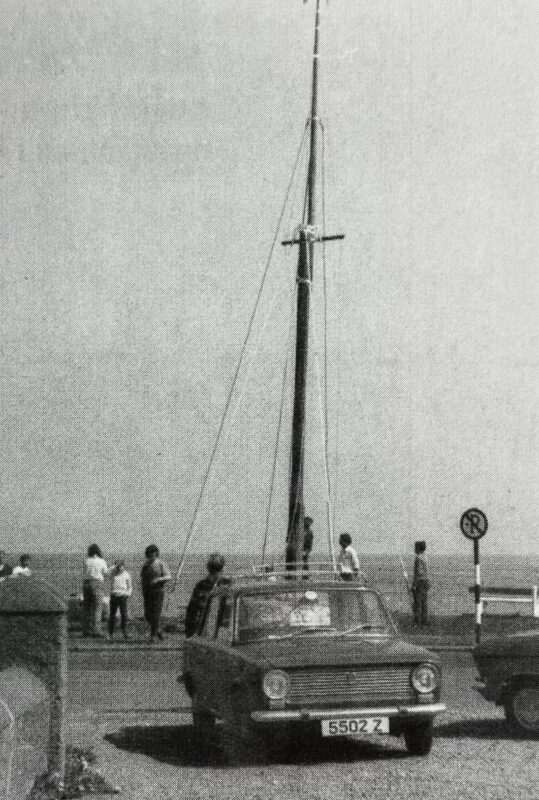
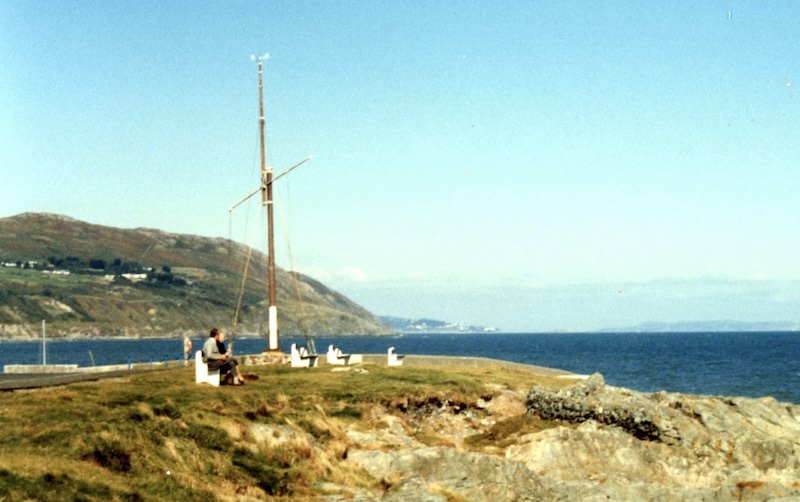 The above 1970s photo shows the full flagstaff mast in place, comprising three sections of timber. The lower mast was from the tug, Southampton, and rather interestingly it bore black scorch marks from the tug’s funnel. When erected in 1971, the report contained in The Wicklow People newspaper noted that the upper mast was refashioned by Derek Paine from the mast of an old sailing boat and he also made the diagonal yardarm from the mast of a Mermaid clinker built sailing boat. The white weather vane that topped the flagstaff was made out of copper and brass by Harry Acheson who rather than using a conventional arrow to point to N.S.E & W used his metal work skills to form a yacht which pointed to the wind direction.
 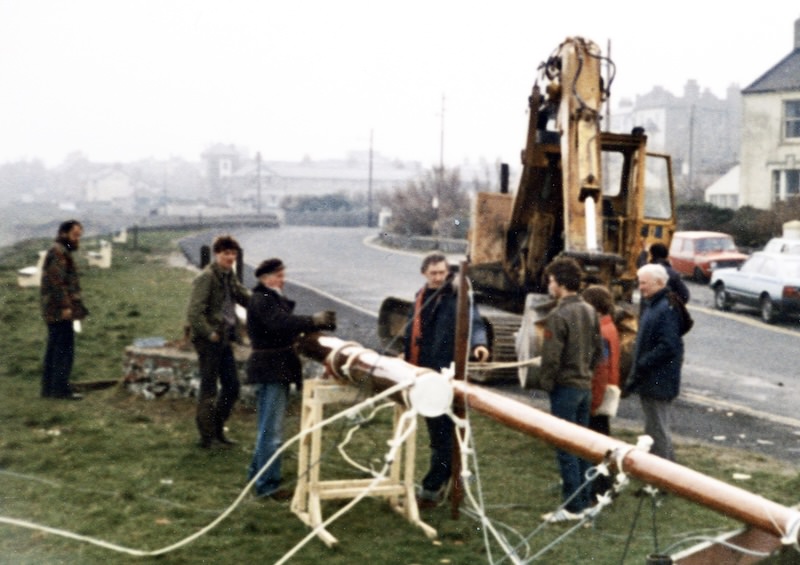 During the 1970s and 1980s the flagstaff mast was periodically removed for sanding down, varnishing and general maintenance before being re-erected by local volunteers including Herbie Hill, Don McLean, Jimmy Kearon, Stanley Paine, Derek Paine, Harry Acheson and Peter McNiff, with the assistance of an excavator to help hoist the mast back into position on its base.
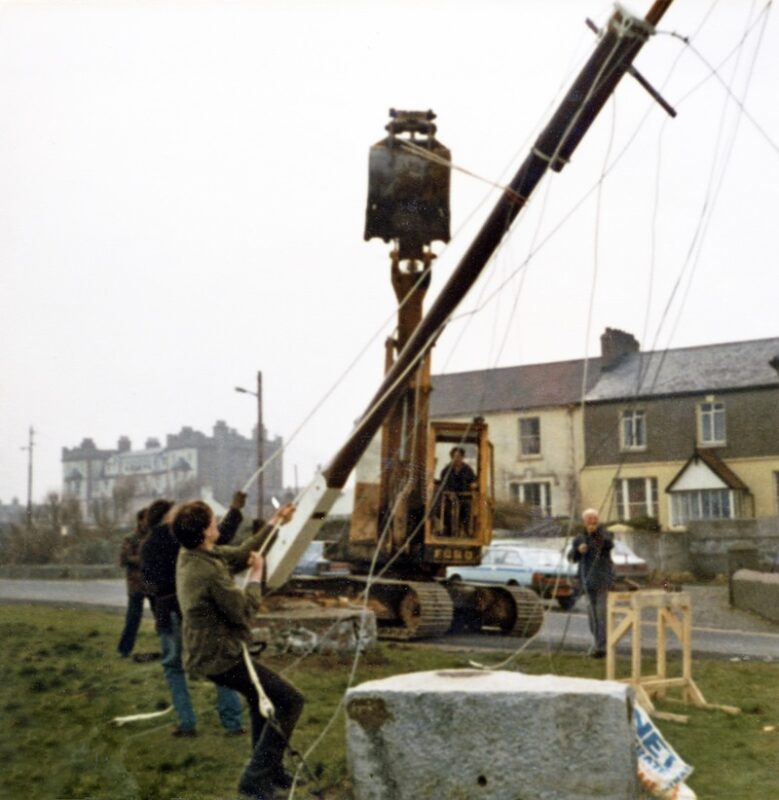 The base of the flagstaff was used regularly as a spot for RNLI flag day collections. The photo left shows the steel stays sunk into the ground which were used to support the flagstaff. One of the three men in the lead photo here of an RNLI flag day collection is Jimmy Kearon, who had a yacht moored in Greystones harbour for many years.

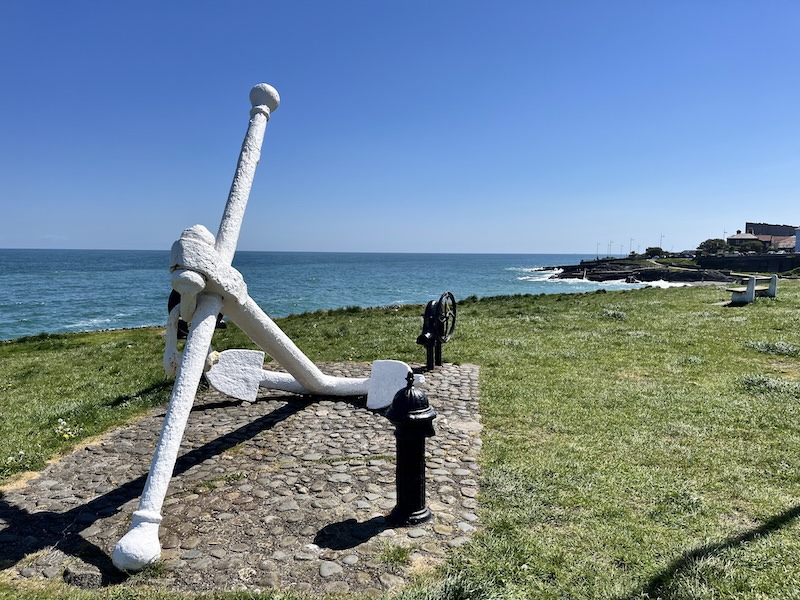 Its history is unknown, but was believed to be around 150 years old when raised from the sea bed, so is around 200 years old today. It was originally placed on the grass across the North Beach road adjacent to the lifeboat house where it remained for a number of years before being moved to its current location.